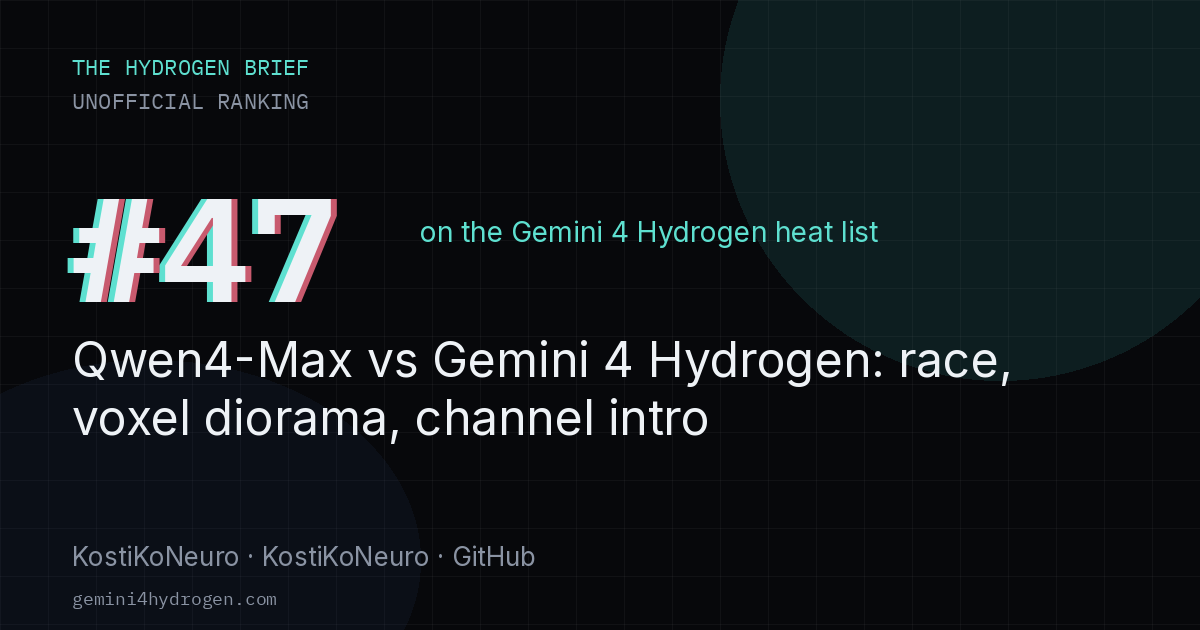
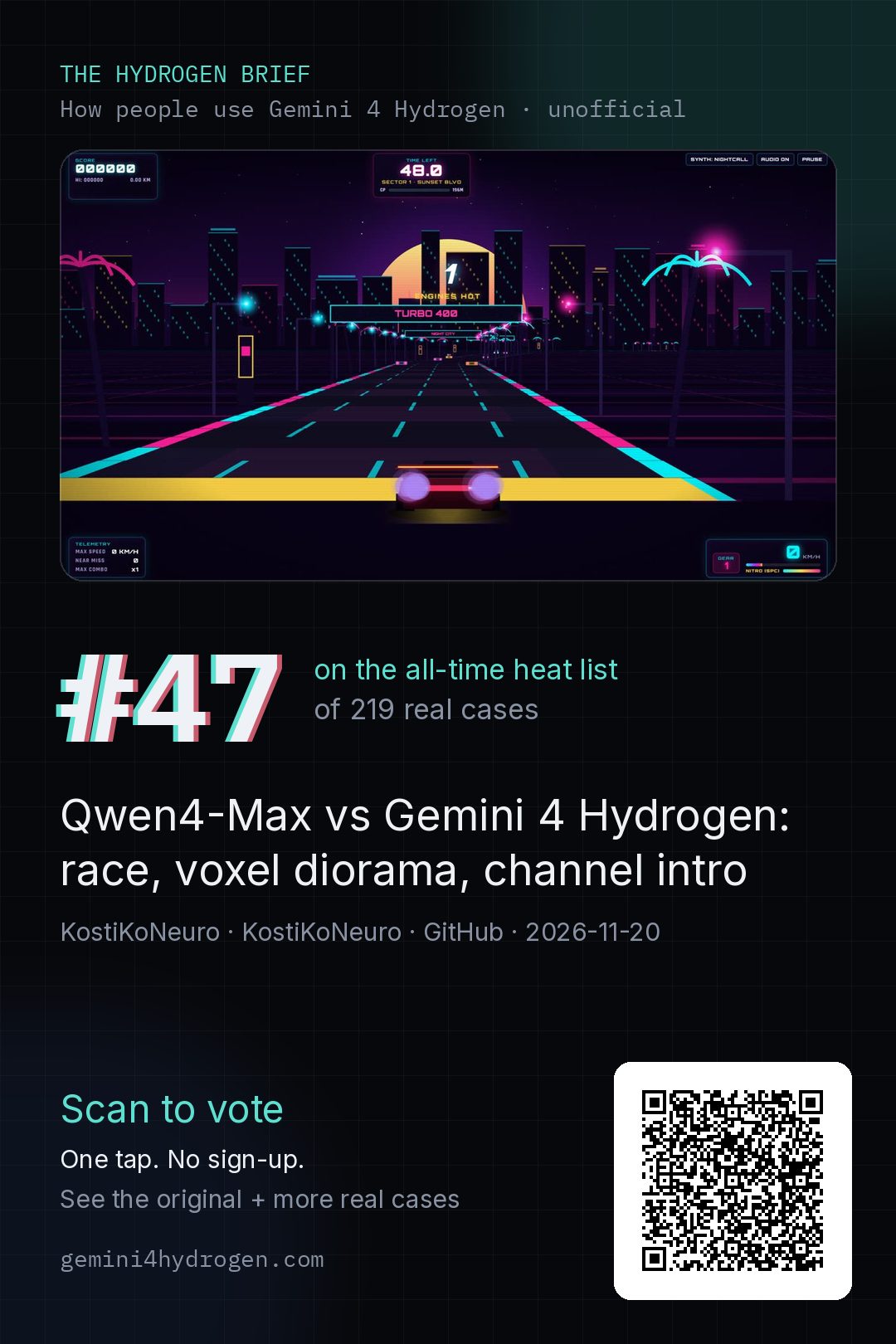
KostiKoNeuro’s case is #47 of 219 real cases. Found it useful? Give it a vote.
One tap · no sign-up · one vote per person, undo anytime
Is this your work? You’re #47 of 219. Share your rank:Get rank card ↓
Qwen4-Max vs Gemini 4 Hydrogen: race, voxel diorama, channel intro
KostiKoNeuro · KostiKoNeuro · GitHub ·
A public repo with playable results from three identical prompts (arcade racer, voxel night-market diorama, channel intro) given to Qwen4-Max and Hydrogen at xhigh; the author's table puts Hydrogen at 160 min and $18.89 list price in total versus 167 min and $5.67 for Qwen4-Max, and the prompts are published in the repo.
Author badge — Paste this on your page. It links back here, and clicks are counted.
<a href="https://gemini4hydrogen.com/s/gh-kostikoneuro-qwen4-vs-hydrogen/?utm_source=badge&utm_medium=embed" rel="noopener"><img src="https://gemini4hydrogen.com/badge/gh-kostikoneuro-qwen4-vs-hydrogen.svg?lang=en" alt="Featured on The Hydrogen Brief, #47" width="280" height="52"></a>
Rank card (for the author and anyone sharing)
A vertical 2:3 card with the current rank and a QR code. Post it on X, Instagram, LinkedIn or a group chat; people who scan land here and can vote in one tap.
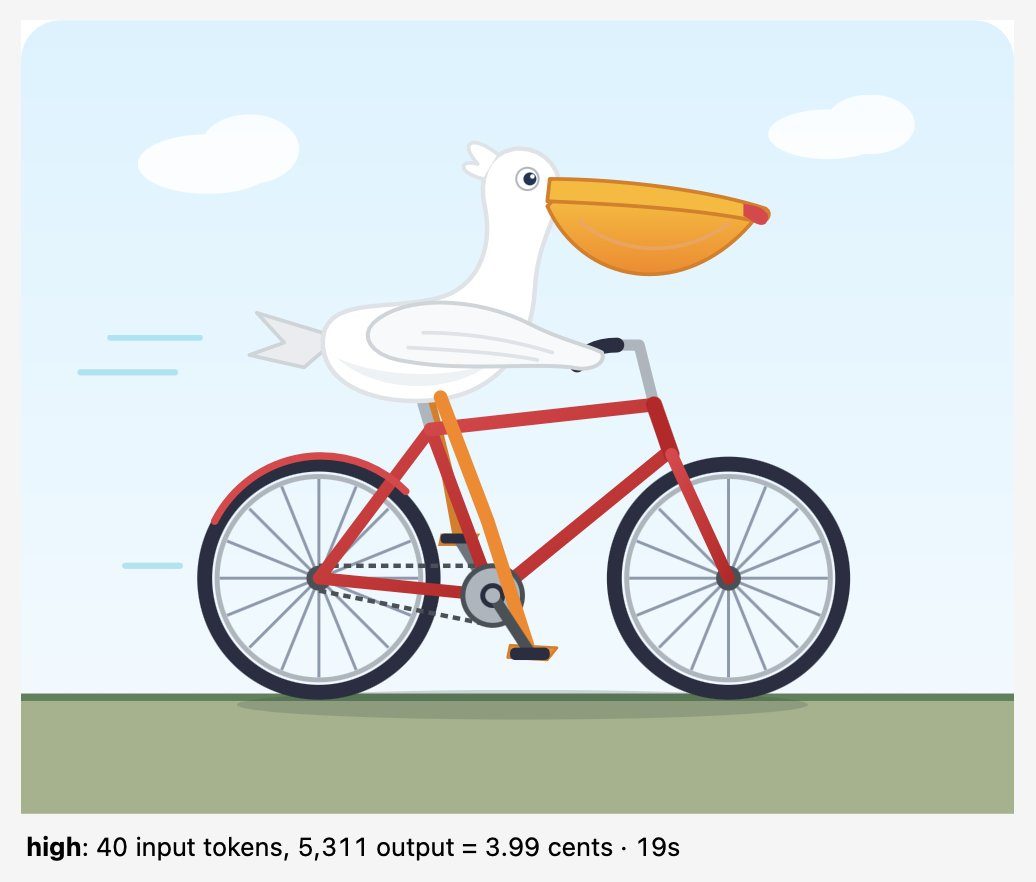
Simon Willison ran his pelican-on-a-bicycle prompt on Hydrogen at high and at xhigh effort: high cost 3.99 cents for 5,311 output tokens, xhigh 23.61 cents for 31,477, and he calls the difference between the two settings very significant.
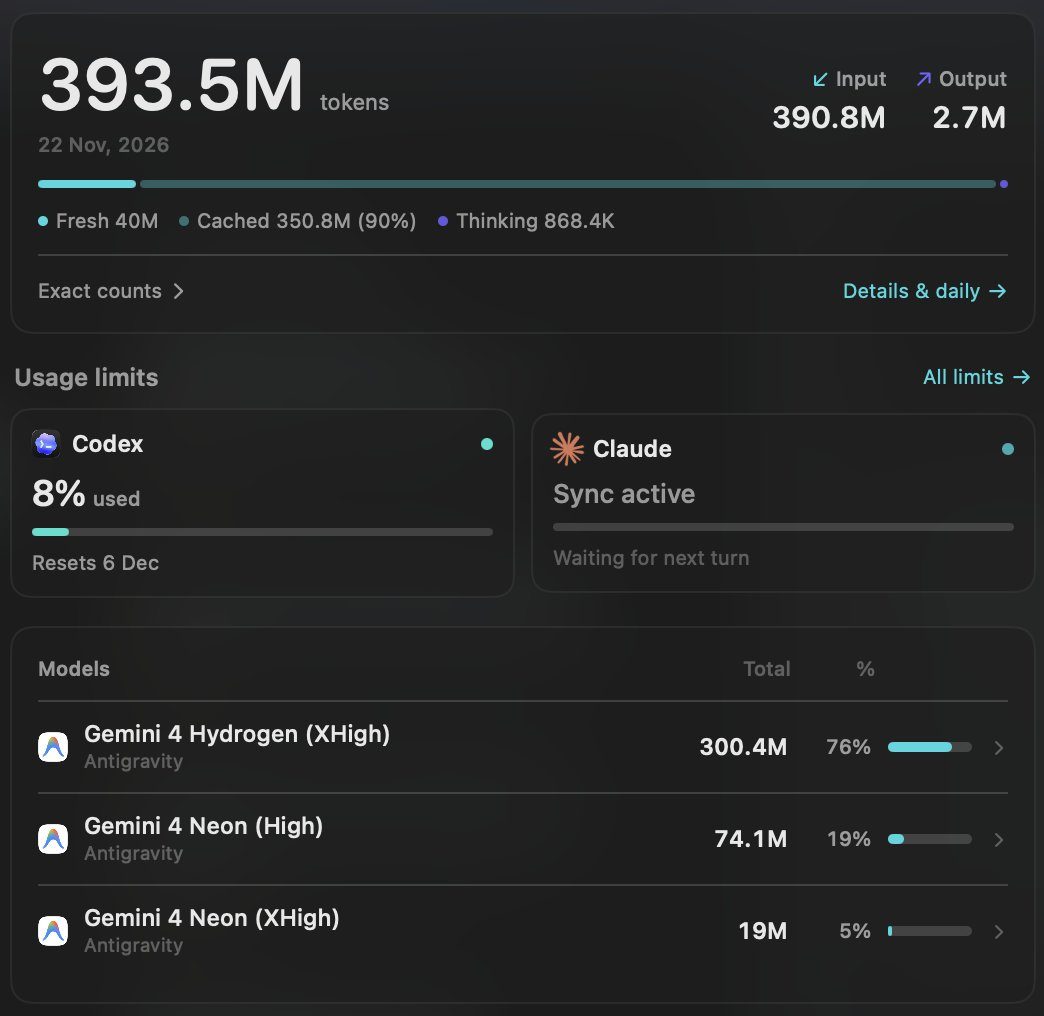
After a day of coding with Antigravity's Orchestrator on Neon, M H Tawfik shared his usage screen: without picking Hydrogen himself, 76% of his tokens were routed to it, and he says code quality stayed high.
Heat is a published formula, not an editorial grade. Missing metrics add nothing and are never estimated. Source figures are the last values fetched from a public API or page, at . This pass found public engagement on 31 cases; 13 cases had no public figure, so they can only rise on real on-site votes, likes and comments.
Source-platform engagement (55%). Each figure is log(1+x), then weighted as below, then turned into a percentile within the same platform so YouTube view counts are not compared raw with X likes. That percentile is then multiplied by 1−e^(−raw/3), so a first-place item with only a little engagement cannot tie a high-engagement item on another platform. If a field cannot be fetched it is dropped and the remaining weights are rescaled.
X: likes 35%, reposts 40%, views 25%
YouTube: views 65%, likes 35%
Reddit: upvotes 60%, comments 40% (no Reddit items in the catalog yet)
GitHub repositories: stars 100% (pull requests do not borrow the repository’s star count)
Hacker News: score 70%, comments 30% (the current HN items are comments without a public score, so they are omitted)
On-site engagement from real visitors (45%). Rank-up votes 60%, likes 25%, comments 15%, also log(1+x). QA visits (?qa=1), the no-track cookie, crawlers, and WARP or our own traffic are excluded from public counts. One vote per visitor per case (a hash of cookie and IP), and a vote can be withdrawn.
Recency decay. Half-life is measured from the source’s published date: 18 hours on the Today board, 4 days on This week, 14 days on All-time. On-site counts for Today and This week only include the last 24 hours or 7 days (UTC).
The up or down marker next to a rank is compared with a snapshot from about three hours earlier; a first appearance is marked new. This is not an official chart, and it is not a test of model quality.